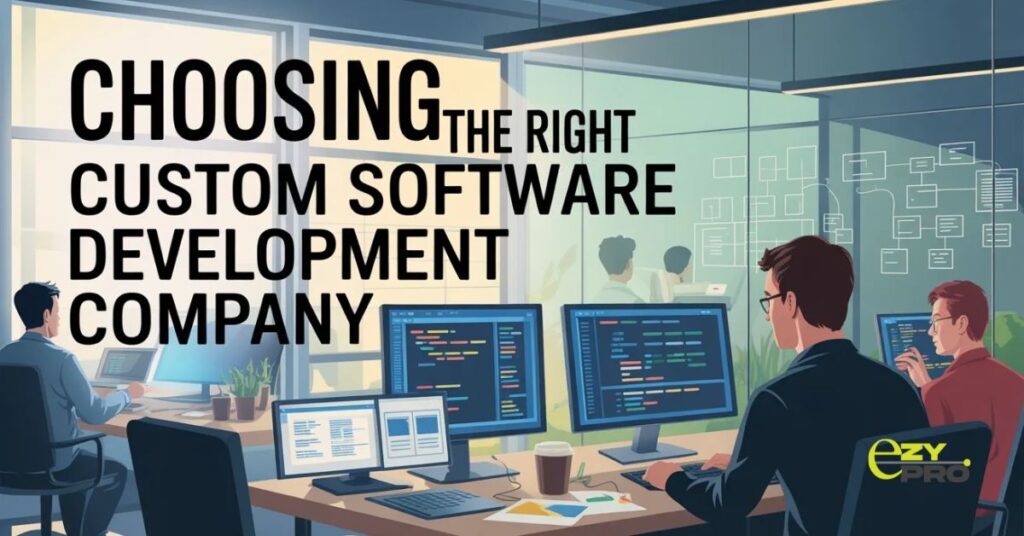
Choosing the Right Custom Software Development Company
- Off the shelf software solves common problems. It is built for the broadest possible audience which means it handles general needs reasonably well and specific ones less so.
- Most businesses reach a point where general is no longer good enough. A process that is genuinely unique to how they operate. A workflow that no existing product handles properly. A competitive advantage that depends on technology built specifically for them rather than adapted from something built for everyone.
- That is when the conversation about a custom software development company becomes serious. And that is when the decision matters most. Because getting it right creates a technology asset the business builds on for years. Getting it wrong creates an expensive problem that is harder to undo than it was to create.
What Custom Development Actually Means
- Custom software is not just existing software with a different logo on it. It is built from the ground up around the specific requirements of a particular business.
- That means it fits the way the business operates rather than requiring the business to adjust how it operates to fit the software. It integrates with existing systems because it was designed to. It handles the edge cases and specific workflows that matter to that business because those were part of the brief from the start.
- The trade off is that it costs more upfront and takes longer to build than buying something off the shelf. The return on that investment depends entirely on how well the development partner understood the problem and how well they translated that understanding into something that actually works.
The Brief Is Where Most Projects Go Wrong
- Custom software development failures are rarely caused by poor coding. They are caused by a gap between what the client needed and what the development team understood them to need.
- That gap opens during the briefing process. Requirements that were assumed rather than stated. Problems that were described at a surface level rather than explored in depth. Constraints that were obvious to the client but never communicated to the development team.
- A custom software development company that rushes through discovery to get to the build is one that is setting up that gap from the start. The code might be excellent. If it is solving a slightly different problem from the one that actually needed solving the outcome will be disappointing regardless of technical quality.
- The briefing and discovery process is not an overhead. It is the most important investment a development project can make.
Technical Skill Is the Starting Point Not the Finish Line
- Every reputable development company can write code. Technical competence is a baseline expectation not a differentiator.
- What differentiates a development partner worth working with is what sits around the technical capability. The ability to ask the right questions before writing a line of code. The judgment to push back when a requirement does not make sense. The communication to keep a non technical stakeholder genuinely informed throughout a build rather than presenting them with a finished product that does not match what they imagined.
- Software built by technically excellent people who did not fully understand the business problem tends to be impressive in the wrong ways. Technically elegant. Practically limited. Built to specification rather than built to purpose.
The Build Is Not the End
- A lot of businesses treat the launch of custom software as the conclusion of the project. It is actually the beginning of the part that matters most.
- Real users interact with the software in ways that testing never fully anticipates. Edge cases appear. Requirements evolve as the business changes. Features that seemed important during the brief turn out to be used rarely. Features nobody asked for turn out to be desperately needed.
- A development partner that disappears after launch leaves the business with software it cannot evolve. Every change requires finding someone new who did not build the original system. Every enhancement costs more because it starts from a position of understanding someone else’s work.
- The ongoing relationship with a custom software development company is worth evaluating as seriously as the capability to deliver the initial build.
Ownership and Documentation
- Custom software is a business asset. Like any asset it needs to be properly understood and documented so the business can maintain control over it.
- Source code ownership should be unambiguous. All documentation should be thorough enough that a competent developer who did not write the original code could understand it. Knowledge transfer at the end of a project should leave the business genuinely independent rather than permanently dependent on the original developers.
- These are not details to be sorted out after the project is complete. They should be agreed upon before a single line of code is written. A development company that is reluctant to discuss these things clearly is one that is building dependency rather than delivering value.
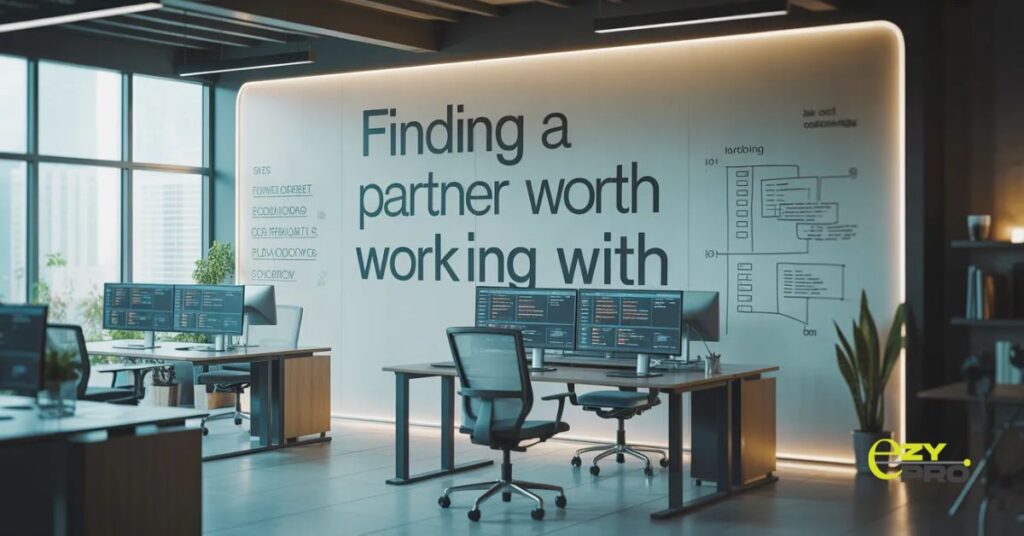
Finding a Partner Worth Working With
- The businesses that end up with custom software that serves them well over time tend to have chosen their development partner on the same basis as any other important business relationship.
- Trust built through honest communication. Evidence of how the company behaves when things get complicated rather than just evidence of what they have built when things went smoothly. A genuine understanding of the business problem rather than an eagerness to propose a solution before fully understanding the question.
- Custom software development company decisions made on price and portfolio alone miss the factors that determine whether the project actually delivers what the business needs.
- EZYPRO builds custom software solutions designed around the specific operational realities of the businesses they are built for. Starting with a genuine understanding of the problem. Building something that fits how the business actually works. And standing behind what gets delivered rather than moving on once the launch is done.
Questions Worth Asking
How do we protect ourselves if the development company is unavailable after launch?
- Ensure full source code ownership and thorough documentation are contractually agreed before the project starts. A well documented codebase maintained by the business independently is the only real protection.
How do we manage a build when requirements keep evolving?
- They always do. Choose a development partner that works with an iterative approach and handles change transparently. Fixed scope contracts on complex builds create incentives that work against the client.
How long does custom software development typically take?
- Depends entirely on complexity. Simple tools can be built in weeks. Complex systems take months. Be wary of timelines that sound too optimistic. Realistic estimates from a partner that understands the scope are worth more than fast promises.